How Proper Furnace Installation Influences Efficiency and Heating Costs
 Jennifer Jung
When the winter chill sets in, your furnace becomes the undisputed champion of your home’s comfort. We often focus on the brand, the size, and the efficiency rating of a new heating unit, but one critical factor often goes overlooked: the quality of the installation. A shoddy, rushed, or inaccurate setup, even for the most advanced furnace, can completely negate its potential savings and performance.
Investing in a professional, meticulous installation is the single biggest influence on your furnace’s long-term efficiency and, consequently, your heating costs. A furnace is a complex, high-stakes appliance, and how it’s introduced to your home environment determines whether it will be a powerhouse of energy efficiency or a costly energy hog.
Right Sizing to Avoid Short-Cycling and Wasted Fuel
The first and most fundamental step of a proper installation is accurate sizing. Many people assume bigger is always better when it comes to heating, but in the world of HVAC, this couldn’t be further from the truth.
An oversized furnace will heat your home too quickly and then shut down, a process known as short-cycling. This is disastrous for efficiency because the unit consumes the most energy during its startup and shutdown phases. When a furnace short-cycles, it never runs long enough to achieve its optimal, most efficient operating temperature, leading to excessive wear and tear, and consuming far more fuel than necessary to meet the thermostat’s setting.
Conversely, an undersized furnace will constantly run, struggling to reach the desired temperature on the coldest days. While less common, this scenario keeps the fuel burning continuously, leading to high utility bills and eventually premature system failure.
Working with reputable technicians offering professional furnace installation services is key for ensuring the furnace runs in longer, steady, and highly efficient cycles, maximizing heat output for the fuel consumed. They conduct a Manual J load calculation, which is a detailed analysis of your home’s insulation, windows, doors, square footage, and air leakage, to determine the precise British Thermal Unit (BTU) capacity your home requires.
Precise Ductwork Sealing and Connection Integrity
A furnace relies on your ductwork to distribute that heat throughout your home. If the connections between the furnace and the main supply and return plenums are loose, or if the nearby ductwork is leaky, a significant amount of the heated air is lost before it ever reaches a vent. In many homes, as much as 20% to 30% of heated air can escape through cracks and poorly sealed joints in the duct system, a devastating loss for your utility budget.
A quality installation includes inspecting, sealing, and properly insulating the duct sections immediately adjacent to the furnace. Professional technicians use mastic sealant or high-grade aluminum tape, not standard duct tape (which degrades quickly), to create an airtight seal. They ensure the connections are secured without crimping, which could restrict airflow and force the furnace fan to work harder, consuming more electricity.
Optimized airflow through perfectly sealed ductwork is essential, as it allows the furnace to maintain a lower, more efficient fan speed and prevents the loss of expensive, conditioned air into unheated spaces like basements or attics.
Correct Gas Pressure and Combustion Air Adjustment
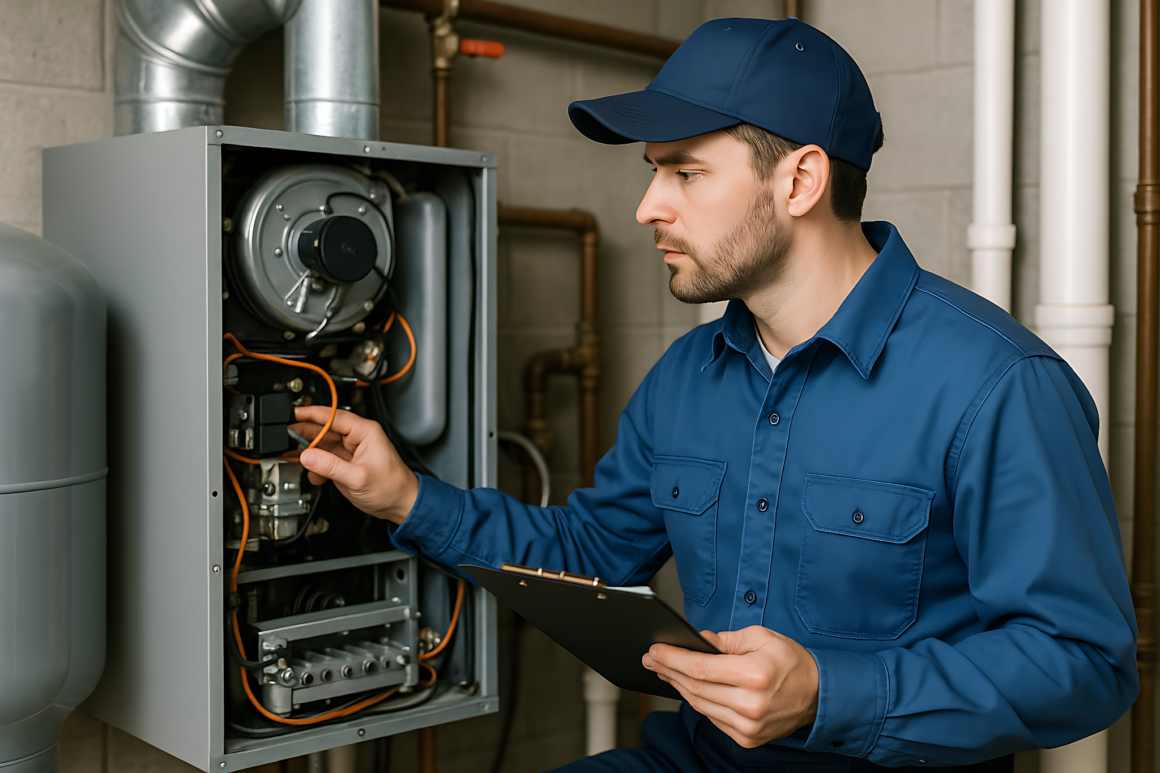
A gas furnace’s efficiency is directly tied to how well it combusts its fuel, whether natural gas or propane. Modern natural gas furnace models have incredibly sophisticated burners that require a specific, precise gas pressure to operate at their peak efficiency rating. An improperly set gas valve can lead to incomplete combustion, where fuel is wasted and potentially harmful byproducts are created, presenting serious safety risks.
During the installation process, a certified HVAC technician uses specialized tools, such as a manometer, to measure and adjust the gas pressure entering the unit to the manufacturer’s exact specification. The gas line must be properly sized and connected to ensure adequate fuel delivery.
The technician also meticulously adjusts the combustion air mixture. Too much air cools the flame, lowering efficiency; too little air causes soot buildup and incomplete burning. Calibrating this air-to-fuel ratio ensures the furnace operates at its highest stated Annual Fuel Utilization Efficiency (AFUE) rating, guaranteeing you are getting the most heat from every dollar of fuel you purchase. For those considering furnace replacement, these safety checks are non-negotiable components of professional service.
Flue Venting and Exhaust System Accuracy
All furnaces produce combustion byproducts that must be safely and efficiently expelled from the home. Modern high-efficiency condensing furnaces utilize unique PVC venting systems that must be installed with a specific pitch (slope) to allow condensation to drain properly. If the venting is installed incorrectly, such as without the correct slope, using the wrong materials, or with too many restrictive bends, it can lead to a blocked drain line.
A blockage will cause the furnace to detect a safety hazard and shut down or cause the heat exchanger to degrade prematurely due to corrosion. The proper installation of the venting system ensures the furnace can efficiently draw fresh air for combustion and safely exhaust waste gases. This attention to detail prevents dangerous carbon monoxide leaks and, on an efficiency front, allows the unit to breathe correctly, maintaining its steady, efficient burn without obstruction.
For electric furnace installations, while venting concerns differ significantly, proper electrical connections and airflow remain equally critical.
Regular maintenance of your HVAC system helps ensure these critical components continue operating safely and efficiently.
Thermostat and Control Integration
The thermostat is the brain of your heating system, and its integration with the new furnace is critical for maximizing efficiency. An improper installation might involve simply reusing an old, incompatible, or miscalibrated thermostat, which can lead to frequent temperature swings and inefficient operation.
A professional installation includes wiring the thermostat correctly to utilize all the features of the new unit, especially for multi-stage or variable-speed furnaces. These advanced units can run at a lower, more efficient capacity for most of the season, only kicking up to full power when absolutely necessary. If the thermostat isn’t wired to communicate these stages correctly, the furnace will only operate on its high-stage setting, negating the entire purpose of buying a variable-speed unit and burning fuel at the maximum rate.
Conclusion
A furnace is a long-term investment, one you expect to pay off through years of reliable, cost-effective service. A professional furnace installation is the invisible investment that translates directly into years of lower energy bills, peak performance, and the peace of mind that your home is safely and efficiently warm all winter long. Don’t underestimate the power of a perfect start; it is the foundation of your home’s long-term heating efficiency.