Stone, water and hairpins: reading Portugal’s landscape from Lisbon to Gerês
 Jennifer Jung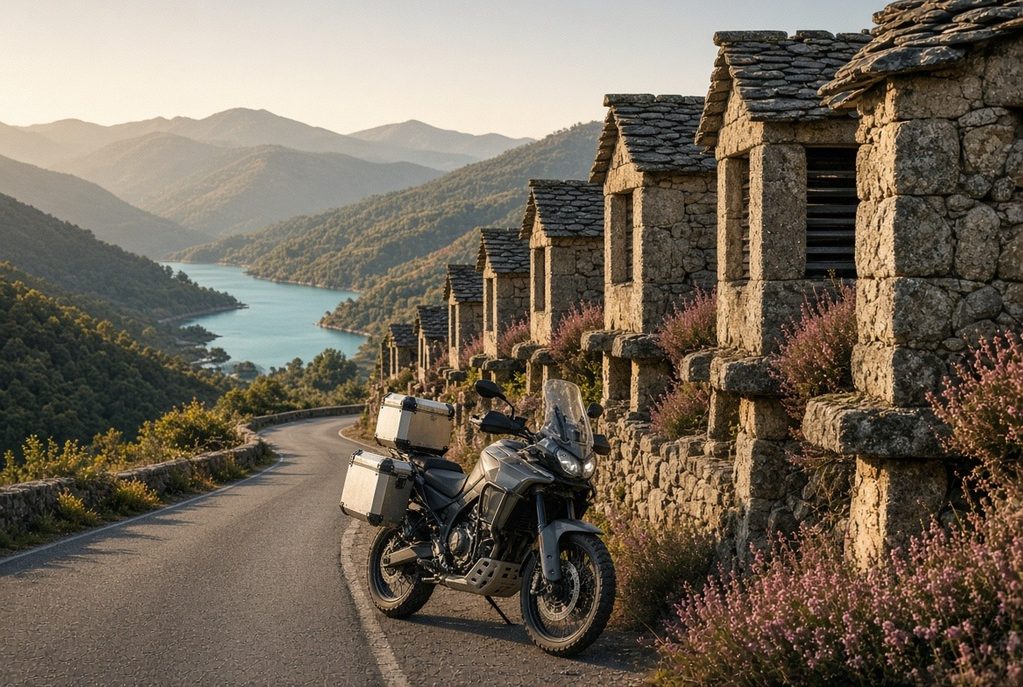
A landscape is easier to read from the height of a saddle than from a car windscreen. From Lisbon’s grid to the granite stores of Gerês, the buildings change as soon as the road does — and the last twenty kilometres explain the first four hundred.
Architecture is easier to understand when you move through it at the speed of a motorcycle. Motorcycle rental in Lisbon with RENT.MOTO.PT is a practical way to leave the grid of the capital and reach the granite villages of Peneda-Gerês in a single day, with a recent adventure bike, insurance and a helmet already arranged.
Two scales of building
Lisbon is planned movement: avenues, the riverfront, the long run north on the A1. The buildings sit in blocks. You register a façade, a square, a tiled wall, then you are gone. After Braga the scale flips. The EN103 and EN304 into Terras de Bouro are not scenic extras. They are the structure of the place: narrow terraces, dry-stone walls, water channels, houses that turn their backs to the wind and open toward the slope that feeds them.
Gerês is vernacular before it is a park. The espigueiros in Soajo and Lindoso are not decoration. They are raised granite stores, set on mushroom-shaped pillars, built for a wet climate and a steep site. Grain had to stay dry. Mice had to stay out. The same logic sits in the road: little run-off, a tight radius, a surface that follows the contour instead of cutting a boulevard through it. Nothing here is ornamental first. Shelter, slope and drainage came before the viewpoint. Even the slate roofs are a climate drawing: pitch for rain, weight for wind.
Water as infrastructure
The Caniçada reservoir is the modern layer. The N308 rides its edge. From Pedra Bela the view is a designed landscape in section: dam wall, drowned valley, forest, the village of Gerês packed into a fold of the hill. Cascata do Arado and the climb toward Portela do Homem are older hydrology — water finding granite — with a thin ribbon of asphalt added later. The border at the pass is almost incidental. The stone does not change nationality.
A city scooter belongs to Lisbon’s streets and to the first kilometres of any trip. A GS, Ténéré or Tracer belongs to this terrain. The bike sits lower than a car, so the retaining wall, the drop and the grain of the granite stay in front of you instead of passing as scenery beyond a window. That is the difference between looking at a section and riding through one.
How to set the day
Lisbon to the park is 400 to 450 km. Use the motorway in the morning so the afternoon is spent where the architecture changes, not in service stations. Sleep in Vila do Gerês or Rio Caldo if you want a second morning among the granaries and the dam. Arrive with light left. The best elevations are useless after dusk, and the cattle do not leave the tarmac because a visitor is in a hurry.
Category A is required for the larger machines. Bring the original licence and a card for the security deposit. Confirm what the insurance covers, what the excess is, and whether luggage or a second helmet is extra. Unlimited mileage looks minor on a form and becomes the point of the ride. April to June and September to October are the clean months. In August the viewpoints fill by mid-morning. In winter the same stone holds fog and wet shade. A 30 percent online deposit is usually enough to hold the bike before the flight. Choose the machine for the last twenty kilometres, not for the A1.
Why the route belongs on an architecture site
A building is a section through climate and ground. This ride is the same drawing, stretched to four hundred kilometres: tiled city, highway cut, granite store, reservoir wall. You do not need a studio visit. You need a machine that can take the last stretch slowly, and enough daylight to see how the wall meets the road. The park is not a backdrop. It is a set of materials doing their job in public. If the day is split well, the ride becomes a measured walk through four building types rather than a race to a viewpoint.
Book the bike before you land. The interesting work starts when the asphalt stops pretending to be a boulevard.