Roger Morph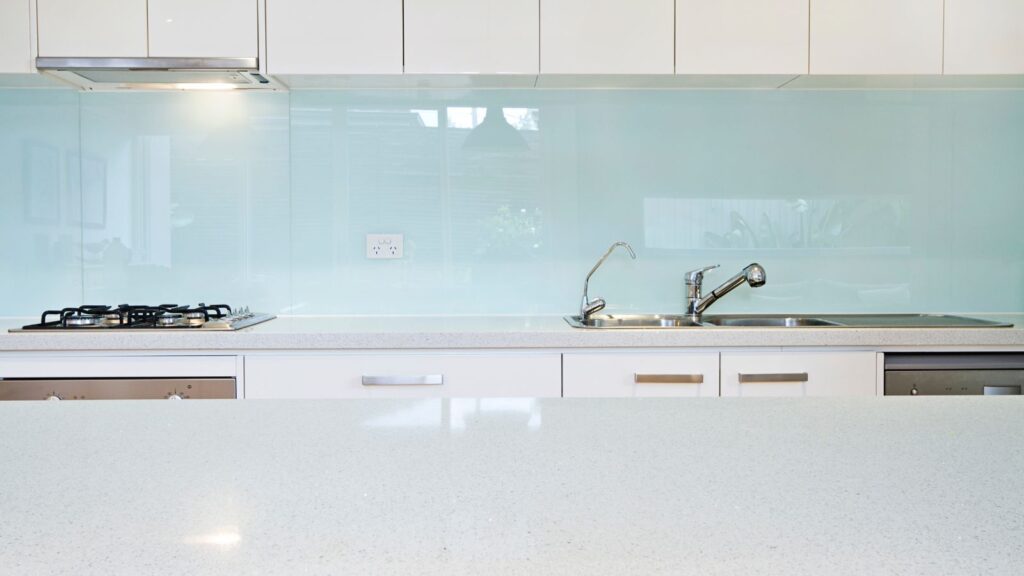
Over the last 10–15 years, we’ve seen a clear shift away from traditional tiled splashbacks towards toughened glass. What was once considered a premium or niche option has now become a mainstream choice in modern UK kitchens.
For most homeowners, the decision comes down to practicality. Tiles can look great initially, but the grout lines inevitably become the weak point. Even with regular cleaning, grout tends to discolour over time, particularly behind hobs where grease and heat are concentrated.
Glass removes that problem entirely.
Because each splashback is manufactured as a single continuous panel, there are no grout lines to trap dirt or grease. The surface remains smooth, sealed, and far easier to keep looking clean long-term.
Designed to handle real kitchen conditions
All properly manufactured glass splashbacks use toughened safety glass. This isn’t standard glass — it’s heat-treated to significantly increase its strength and thermal resistance.
When installed correctly, toughened glass is perfectly suitable behind gas hobs, electric cookers, and induction hobs. It’s the same type of safety glass used in shower screens, commercial environments, and architectural glazing.
In normal domestic use, durability simply isn’t an issue.
Precision manufacturing makes a significant difference
One of the biggest advantages today is the level of accuracy that can be achieved with made-to-measure glass.
Each splashback can be cut to exact dimensions, including precise cut-outs for sockets, switches, and extractor units. This allows the glass to sit cleanly within the space rather than relying on filler trims or adjustments.
UK-based manufacturing also ensures faster turnaround times and more consistent quality compared with mass-produced imported panels.
For homeowners, that translates into a better fit and a cleaner overall finish.
Greater flexibility in colour and design
Glass also offers far more flexibility from a design perspective. Whether the requirement is a subtle neutral colour, an exact match to existing paintwork, or a more striking feature panel, glass can accommodate it.
Many customers now colour-match their splashbacks to brands such as Farrow & Ball or Dulux, creating a fully integrated look within the kitchen.
Mirror finishes and printed designs have also become increasingly popular, particularly in contemporary spaces.
Easier to maintain long-term
From a practical standpoint, glass is simply easier to live with.
The surface is non-porous, so it doesn’t absorb grease, moisture, or cleaning products. In most cases, it can be cleaned in seconds with a standard glass cleaner and cloth.
There’s no grout to scrub and nothing to deteriorate over time.
This is one of the main reasons glass is widely used not only in homes, but also in rental properties and commercial kitchens where durability and ease of maintenance are essential.
A long-term solution rather than a short-term finish
As manufacturing has become more efficient, glass splashbacks have become far more accessible than they were previously. What was once seen as a premium upgrade is now a practical long-term alternative to tiles.
For many homeowners, it’s a one-time installation that continues to look the same years later.
Summary
Glass splashbacks offer a cleaner finish, require less maintenance, and provide greater design flexibility compared with traditional tiles.
With accurate manufacturing and proper installation, they deliver a durable, long-lasting solution that suits both modern and traditional kitchens.