Zyrendral Xythorian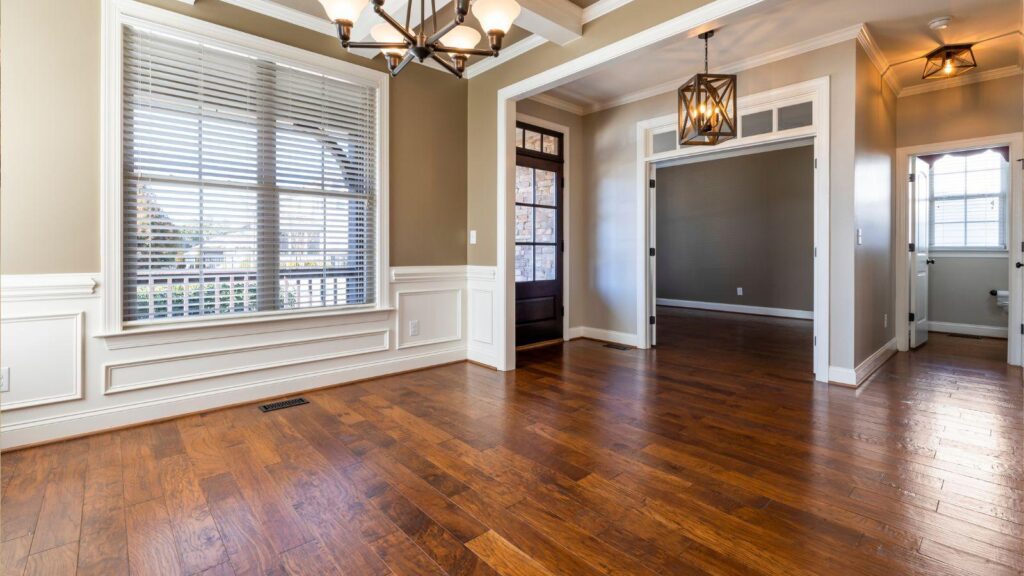
Two rooms can share the same floor plan, the same furniture layout, and the same colour palette — and still feel entirely different. One feels warm and settled. The other feels cold and temporary. The difference, more often than not, comes down to materials. Not the objects in the room, but the surfaces and structures that define it: the floor beneath your feet, the walls you lean against, the frames around every window.
Interior design conversations tend to gravitate toward colour, layout, and furniture. These are the visible, changeable layers. But the materials that form the bones of a room — the ones you inherit, choose during renovation, or live with for decades — have a deeper and more lasting influence on atmosphere than any decorating decision made on top of them.
How Materials Communicate Before You Notice Them
Every material in a room sends a signal. Stone reads as grounded and permanent. Exposed brick suggests history and texture. Polished concrete communicates industrial restraint. Glass opens space and dissolves boundaries. These impressions are not conscious — nobody walks into a room and catalogues material properties — but they shape mood instinctively.
Wood is one of the most emotionally loaded materials in interior design. Research consistently shows that visible wood in a room lowers perceived stress and increases feelings of warmth, even when the actual temperature is unchanged. This is partly visual — the grain, the colour variation, the organic imperfection — and partly tactile. Wood feels warm to the touch because it conducts heat away from the skin more slowly than metal, stone, or glass.
Synthetic materials, by contrast, tend to register as neutral at best. uPVC is functional and unobtrusive, which is sometimes exactly what a design needs. But it adds nothing to the sensory landscape of a room. It does not age, it does not develop patina, and it does not interact with light the way natural surfaces do. In a space designed around warmth and character, a synthetic element can feel like a blank note in an otherwise rich composition.
Flooring Sets the Tone, Walls Add Depth
The floor is the largest continuous surface in any room, and its material sets the atmospheric baseline. Solid hardwood flooring — oak, ash, walnut — creates a foundation of warmth and substance. Engineered wood offers similar visual warmth with greater dimensional stability. Polished concrete or large-format porcelain tiles shift the mood toward coolness and precision.
Walls are subtler but equally influential. Lime plaster has a soft, matte finish with gentle surface variation that absorbs and scatters light differently from machine-finished gypsum. Exposed timber beams or panelling introduce rhythm and texture overhead. Even the choice between a smooth painted finish and a textured clay plaster changes how a room feels — one is crisp and controlled, the other organic and tactile.
The key principle is consistency of language. A room that pairs solid oak flooring with lime walls and timber joinery speaks one coherent material language. A room that mixes hardwood floors with uPVC window frames and laminate shelving sends conflicting signals — warm here, synthetic there — and the atmosphere suffers for it, even if no single element is wrong on its own.
Windows: The Material Junction Between Inside and Outside
Windows occupy a unique position in a room’s material palette. They sit at the boundary between interior and exterior, visible from both sides, and they interact with light more directly than any other element. The frame material — its depth, its profile, its surface finish — affects how that transition feels.
A timber window frame has depth and grain that softens the edge between indoors and outdoors. Painted timber offers a clean, opaque finish with subtle variation; oiled or stained hardwood brings warmth and richness that connects visually with timber flooring, furniture, and joinery elsewhere in the room. The frame becomes part of the interior design, not just a functional boundary.
In period properties, the window is often the strongest architectural feature in the room. A six-over-six sash with slender glazing bars introduces pattern, rhythm, and shadow that no other element replicates. Replacing it with a single-pane casement in a different material does not just change the window — it changes the room’s character at a fundamental level.
For architects and homeowners working to maintain or establish a coherent material atmosphere, bespoke timber windows offer the ability to match frame profiles, glazing configurations, and finishes to the specific design intent of a space — whether that is a faithful restoration of a Georgian sash or a contemporary flush casement in a minimalist scheme. The window becomes a design decision, not a compromise.
Light, Ageing, and the Atmosphere That Develops Over Time
Natural materials interact with light in ways that synthetic surfaces cannot replicate. Wood grain catches and scatters light, creating soft highlights and micro-shadows that shift as the sun moves through the day. Stone develops a gentle sheen where it is touched. Brass hardware darkens and mellows. These changes are not flaws — they are what make a room feel alive rather than static.
Ageing is part of the design. A solid oak threshold that wears smooth underfoot tells the story of a home that is lived in. A timber window sill that develops a patina over years of books, plants, and morning light has a presence that no factory finish can manufacture. This quality — the ability to age with grace rather than deteriorate into replacement — is one of the most undervalued attributes of natural materials in interior design.
Synthetic materials, by contrast, are designed to look the same on day one as on day one thousand. That consistency is an advantage in some contexts — clinical spaces, high-traffic commercial environments — but in a home, it can feel lifeless. The best interiors develop character over time. The materials you choose determine whether that development enriches the space or simply degrades it.
Designing With Material Intent
Atmosphere is not an accident. It is the cumulative effect of every material decision in a room, from the floor to the ceiling, from the walls to the window frames. The most considered interiors are the ones where those decisions are made with intent — where materials are chosen not just for performance or cost, but for what they contribute to the feeling of the space.
Before choosing a paint colour or selecting a light fitting, look at what the room is made of. If the materials speak a coherent language — warm, natural, grounded — everything you add on top will feel right. If they do not, no amount of decorating will fully resolve the disconnect. The atmosphere of a home begins with its materials. Everything else is a layer on top.