kdarchitects.net Why the Crucible’s 980 Seats Produce an Atmosphere No Arena Can Purchase
 Jennifer Jung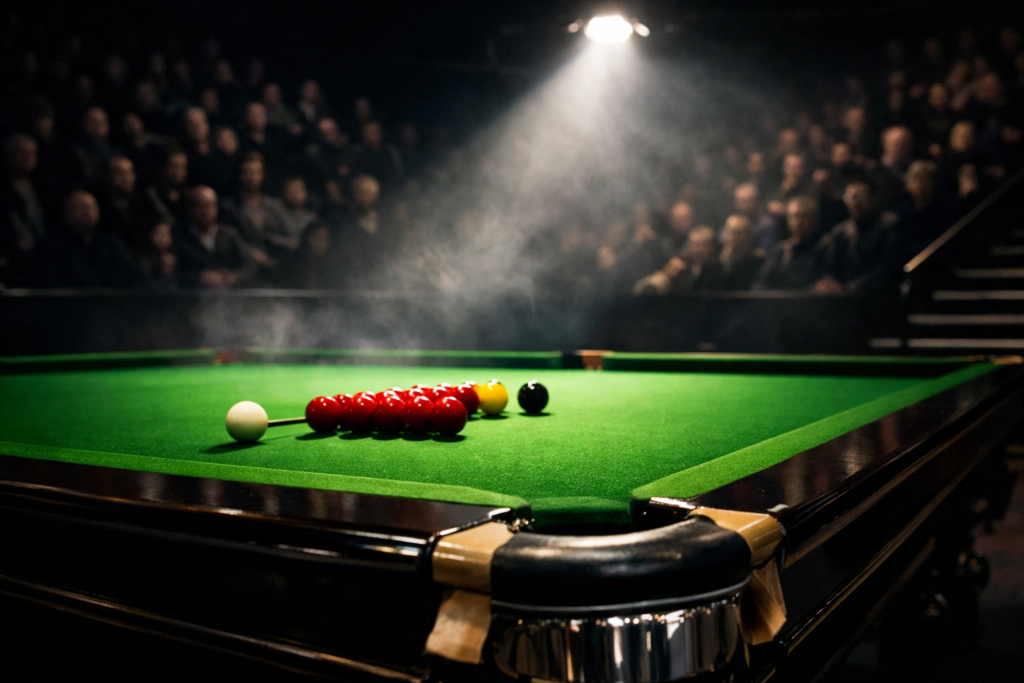
Big sporting events have turned into a size game – bigger screens, more capacity, louder sound. For years, stadium design has assumed that bigger is better.
The Crucible Theatre in Sheffield holds 980 people and it is hosting World Snooker Championship final since 1977. It has never tried to be bigger and it has never needed to be one of the stadiums that have a seating capacity of tens of thousands.
The venue was built in 1971 as a playhouse, recommended to tournament promoter Mike Watterson by his wife after she saw a production there. The building was designed for theatre, not sport, so it is not very ironic to hear when players describe the atmosphere as suffocating in the best possible sense. A crowd of fewer than a thousand people creates an intensity that 20,000 in a standard arena rarely matches, because the building itself is amplifying everything.
What Theatre Architecture of the Crubicle Does to an Audience
The intimacy is built into the geometry. Maths is behind making Crubicle the masterpiece it is.
In a conventional sports arena, crowd noise disperses upward and outward. Unlike the usual, at the Crucible, the geometry channels it back toward the playing surface.
The Crucible’s designers were solving for drama. Their work was for the love of architecture and the fact that it produces one of the most watched sporting environments on television was never part of the brief. No purpose-built snooker venue has come close to producing the same atmosphere, and the ones that tried to scale up lost the thing that made it worth watching.
Snooker as a television product is inseparable from that building; over 500 million people watch the World Championship across global broadcasters. What the cameras capture is not just the match. It is the texture of the room, the visible tension, the silence before a crucial shot in a space where silence feels thick rather than empty.
The 2026 Edition and What Is Changing
The 2026 snooker championship is starting at April 18 with the final on May 4 and it is the 50th consecutive year where finale is held at the Crucible.
Zhao Xintong will be playing as defending champion, having beaten Mark Williams 18-12 in 2025, the first Chinese player to win the title. He then beat Judd Trump 10-3 in the Tour Championship a few days before Sheffield, which is not the form of someone likely to fall quietly in the first round.
A fun fact: no first-time champion has ever defended the title at the Crucible. Not the legendary player like O’Sullivan, not Hendry, not Davis.
Zhao knows this very well.
If this historical footnote adds pressure or motivates him is something only the first session will answer.
On the venue itself, 2026 brings the first redesign of the playing area in the tournament’s history. Sections around the walk-on route, previously locked off for broadcasters and officials, are opening as premium seating called Legends Walk. For anyone who has watched the walk-on on television and wondered what it would feel like to be three feet from a player heading to the table with everything on the line, this is the first time that question has had a commercial answer.
Beyond this year, World Snooker has committed to the Crucible until 2045. A refurbishment planned for 2028 adds 500 seats, backed by £45 million including £35 million from government funding. Taking capacity from 980 to roughly 1,480 while keeping the atmosphere that justified the investment is the kind of design problem that does not have an obvious solution. Whoever signs off on that project will be working in the shadow of a building that succeeded entirely by accident.
Venue Design and the Betting Market
What that produces is a viewing audience that follows the tournament across 17 days rather than tuning in for a final. That depth of engagement makes the snooker world championship one of the most bet-on events in the UK sporting calendar, with markets covering outright winner, century break tallies, and individual match results throughout the full duration of the event.
Intimate architecture creates devoted followers in a way that large venues rarely do. The Crucible was never designed with any of that in mind. A playhouse recommended by a promoter’s wife after she saw a production there ended up defining what a sporting atmosphere could feel like. Architecture rarely works out that neatly.