Roger Morph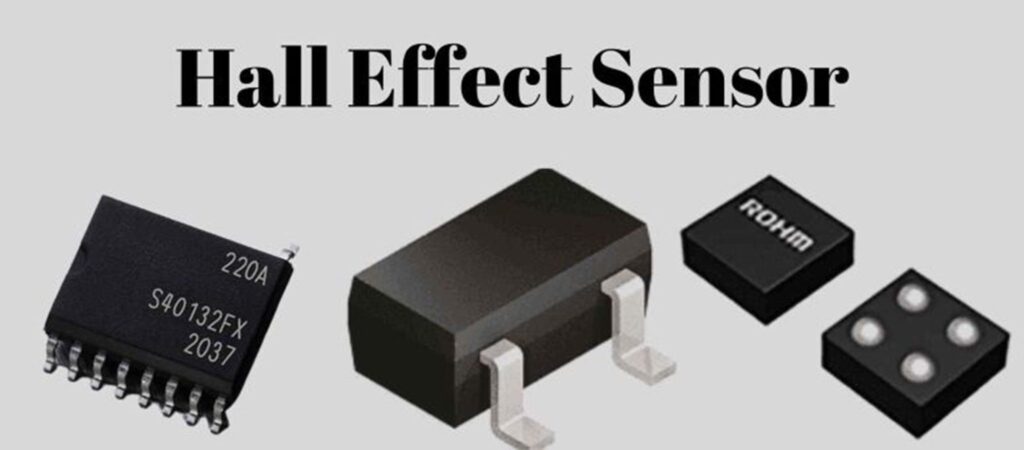
Have you ever wondered how your smartphone knows which way is north, or how modern cars detect wheel speed without any moving parts grinding away? These everyday marvels rely on a clever piece of technology that’s been around for over a century, quietly revolutionizing industries from automotive to consumer electronics. In fact, the global market for magnetic sensors, including Hall Effect types, is projected to reach $7.6 billion by 2027, driven by demands in electric vehicles and smart devices. In this article, you’ll learn the basics of Hall Effect sensors, dive into their inner workings, explore various types, and discover their practical applications across different fields. We’ll also touch on key considerations to keep in mind when integrating them into projects.
What Exactly is a Hall Effect Sensor?
At its core, a Hall Effect sensor, often just called a Hall sensor, is a device that detects magnetic fields and converts them into electrical signals. Named after physicist Edwin Hall, who discovered the underlying principle in 1879, these sensors act as transducers. A transducer, for those unfamiliar, is simply something that changes one form of energy into another. In this case, that means transforming magnetic energy into voltage.
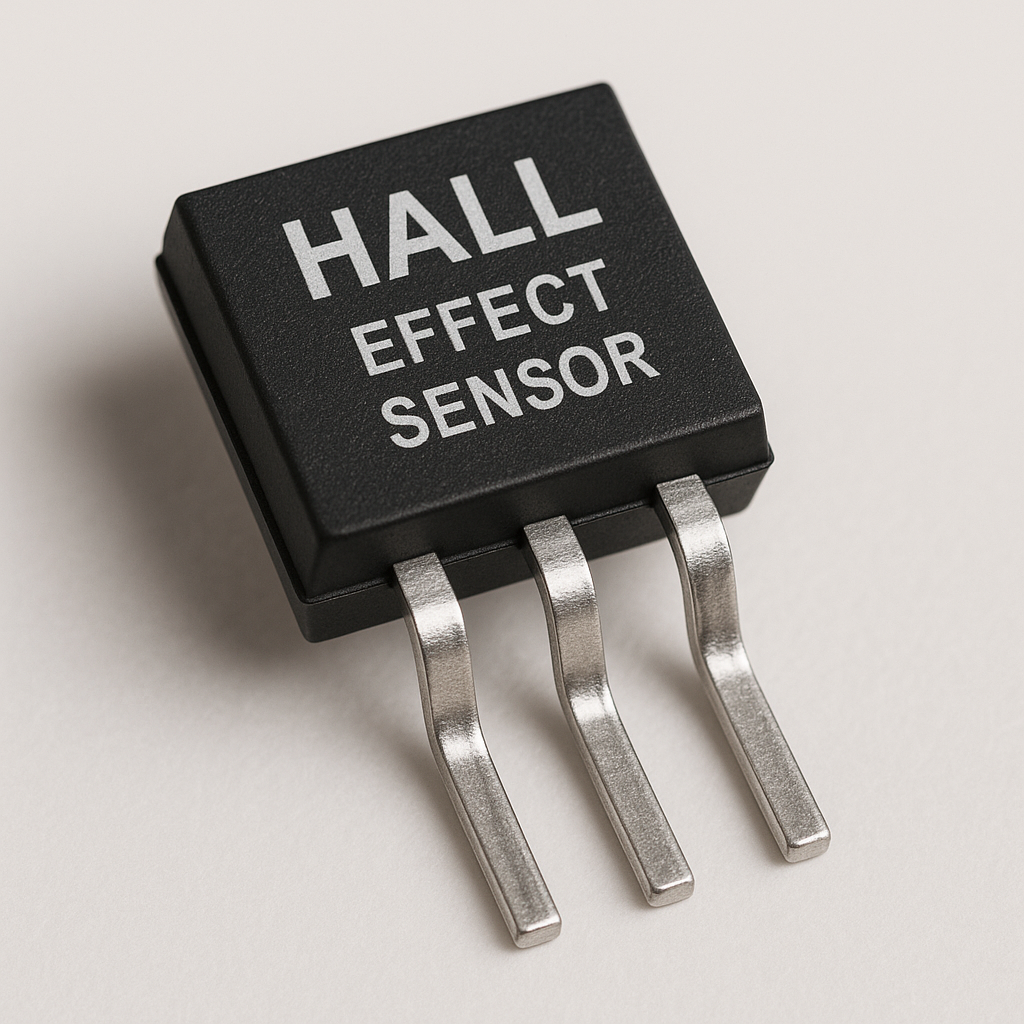
These sensors come in compact packages, typically as integrated circuits (ICs) that combine the sensing element with supporting electronics. Unlike mechanical switches that wear out over time, Hall sensors operate without physical contact, which makes them incredibly durable. They measure the strength and direction of magnetic fields, opening up a world of possibilities for precise, non-invasive monitoring.
Picture a thin strip of semiconductor material, like silicon or gallium arsenide, sandwiched inside the sensor. When exposed to a magnetic field, this material generates a tiny voltage difference known as the Hall voltage. It’s this voltage that the sensor amplifies and processes to provide usable output, whether it’s a simple on/off signal or a proportional reading of field intensity.
The Science Behind It: How Hall Effect Sensors Work
To grasp how these sensors function, let’s break it down step by step, starting with the fundamental physics. The Hall Effect occurs when an electric current flows through a conductor placed in a perpendicular magnetic field. Electrons, or in some materials, positive charge carriers called holes, get deflected by the Lorentz force. That’s a magnetic influence that pushes charged particles sideways.
Here’s where it gets interesting: as these charges pile up on one side of the conductor, they create an imbalance, resulting in a measurable voltage across the material’s width. This Hall voltage is directly proportional to the magnetic field’s strength. Stronger fields mean bigger voltages, and its polarity reveals the field’s direction.
In practical terms, a Hall sensor applies a constant bias current to its sensing element. When a magnet approaches, the field interacts with the current, producing that telltale voltage. Built-in amplifiers boost the signal, and depending on the design, the output might trigger a digital switch or provide an analog reading for finer control.
Of course, real-world factors like temperature can affect accuracy. Sensors often include compensation circuits to stabilize performance. Some advanced models even integrate microcontrollers for smarter processing, filtering out noise from electromagnetic interference (EMI). EMI refers to unwanted electrical disturbance from nearby sources.
Different Types of Hall Effect Sensors
Not all Hall sensors are created equal. They vary in design to suit specific needs. Understanding these variations helps in selecting the right one for any application.
- Switching (Digital) Hall Sensors: These act like on/off switches, activating when the magnetic field reaches a certain threshold. Ideal for binary detection, such as sensing if a door is open or closed.
- Linear (Analog) Hall Sensors: Unlike switches, these output a continuous voltage that scales with the magnetic field’s intensity. They’re perfect for measuring gradual changes, like position along a sliding scale.
- Unipolar Sensors: Respond only to one magnetic polarity, say, the north pole, ignoring the opposite. Simple and cost-effective for basic proximity tasks.
- Bipolar Sensors: Detect both north and south poles, flipping output based on polarity. Useful in applications requiring direction sensing, such as motor commutation.
- Omnipolar Sensors: A versatile hybrid that reacts to either pole, offering flexibility in setups where magnet orientation might vary.
Each type has its strengths, but they all share the Hall Effect foundation, ensuring reliability across diverse environments.
Real-World Applications of Hall Effect Sensors
Hall Effect sensors pop up in surprising places, powering innovations that make life safer and more efficient. Their ability to sense without contact means they thrive in harsh conditions, from dusty factories to vibrating engines.
Consider the automotive sector, where these sensors monitor crankshaft position to optimize engine timing, or track wheel speed for anti-lock braking systems (ABS). In electric vehicles, they help regulate motor speed and battery current, contributing to smoother rides and longer ranges.
Beyond cars, consumer gadgets benefit too. Smartphones use them in digital compasses for navigation apps, while laptops employ them to detect lid closure, triggering sleep mode. In industrial settings, Hall sensors measure fluid flow in pumps or detect gear teeth in machinery for precise speed control.
Here’s a quick list of common applications to illustrate their versatility:
- Position sensing in joysticks and throttles for gaming and aviation controls.
- Current sensing in power supplies to prevent overloads and ensure safety.
- Proximity detection in security systems, like tamper-proof alarms on doors.
- Speed measurement in bicycles or treadmills for fitness tracking.
- Magnetic encoding in credit card readers or elevator controls.
Even in aerospace, they monitor turbine speeds, and in medical devices, they enable non-invasive blood flow monitoring. The list goes on, highlighting how these unassuming components underpin modern technology.
Advantages and Considerations When Using Hall Effect Sensors
What makes Hall Effect sensors stand out? For starters, their contactless operation eliminates wear and tear, leading to lifespans often exceeding millions of cycles. They’re also compact, energy-efficient, and resistant to dirt, oil, or moisture, unlike optical sensors that can get obscured.
On the flip side, they’re sensitive to extreme temperatures, which might require thermal compensation in designs. Strong external magnetic fields can interfere, so shielding is sometimes necessary. Calibration ensures accuracy, especially in linear models where output must map precisely to field strength.
When sourcing components, partnering with a reputable Hall Effect sensors manufacturer can make all the difference. Look for those offering customizable options, robust testing, and compliance with standards like ISO 9001 to guarantee quality without compromising on performance.
Despite these considerations, the benefits far outweigh the drawbacks in most scenarios, making Hall sensors a go-to choice for engineers seeking reliable, versatile solutions.
Wrapping It Up
From the hum of your car’s engine to the swipe of a smart card, Hall Effect sensors quietly enable the precision we take for granted. As industries push toward automation and electrification, their role will only grow, adapting to new challenges like renewable energy systems or autonomous robots. Whether you’re a hobbyist tinkering with electronics or a professional designing the next big thing, understanding these sensors equips you to innovate with confidence.